
 Image 1 of 1
SHELTER BUILDING COURSE
Shelter Building Course Norway – 3 Days of Bushcraft & Survival Training
Course Details
3 Days / 2 Nights in the Norwegian Wilderness
Dates: 19 - 21 March 2027
Class Limit: 15 participants
Limited places are available to maintain instructional quality and safety.
Includes: Professional instruction, practical field training, and a certificate of completion.
The registration deadline is two weeks before the course start date.
Class Gear List – Click Here
Meeting Location – Click Here
Cancellation Policy – Click Here
Participant Waiver – Click Here
Shelter is more than a roof.
It is protection, temperature regulation, and survival.
In the Norwegian wilderness, exposure to rain, wind, and cold can quickly become more dangerous than hunger or thirst. The ability to build an effective shelter is therefore one of the most important skills you can carry into the outdoors.
Special 2027 Collaboration
The 2027 Shelter Building Course will be led by Piero Visconti together with Kazim, known online as “Turkish Viking.”
Kazim is an experienced bushcraft practitioner and outdoor creator whose work explores wilderness living, survival, camping, woodworking, carving, and the construction of shelters and wooden structures in demanding outdoor environments.
This special collaboration brings together Primal Norway’s structured approach to wilderness training and Kazim’s practical, build-focused experience. Participants will benefit from two instructors, complementary perspectives, and close guidance throughout the planning, construction, testing, and improvement of their shelters.
Discover Kazim’s work:Instagram · YouTube
This immersive three-day course will take you beyond basic tarp setups and teach you how to design, construct, and improve shelters using both modern equipment and natural materials.
You will learn to read the landscape, select a safe location, understand how weather affects shelter design, and create structures capable of protecting you from challenging Norwegian conditions.
The course is practical and hands-on from beginning to end. You will work with the materials available around you, use cutting tools responsibly, and discover how good planning, sound technique, and attention to detail can transform a simple structure into a secure wilderness refuge.
What You Will Learn
Understanding exposure and the role shelter plays in a survival situation
Selecting a safe and effective shelter location
Identifying hazards such as falling branches, unstable ground, flooding, wind exposure, and cold-air pockets
Understanding heat loss through conduction, convection, radiation, and evaporation
Working with tarps, cordage, ridgelines, stakes, and natural anchor points
Essential knots and adjustable tensioning systems for shelter construction
Building different tarp configurations for rain, wind, and changing weather
Constructing natural shelters using locally available materials
Creating raised beds and insulation from cold and wet ground
Improving drainage, wind protection, ventilation, and heat retention
Safely positioning and managing a fire near a shelter
Responsible use of knives, axes, saws, and other cutting tools
Evaluating, testing, repairing, and improving a shelter
Collecting and using natural materials responsibly within an authorized training area
The Experience
During the first stage of the course, Piero and Kazim will introduce the principles behind effective shelter construction. You will learn how location, weather, terrain, available materials, and individual needs influence the type of shelter you should build.
You will then practise several tarp configurations and learn how to create strong ridgelines, reliable anchor points, and effective tensioning systems. These skills will give you fast and adaptable shelter options for hiking, bushcraft, and emergency situations.
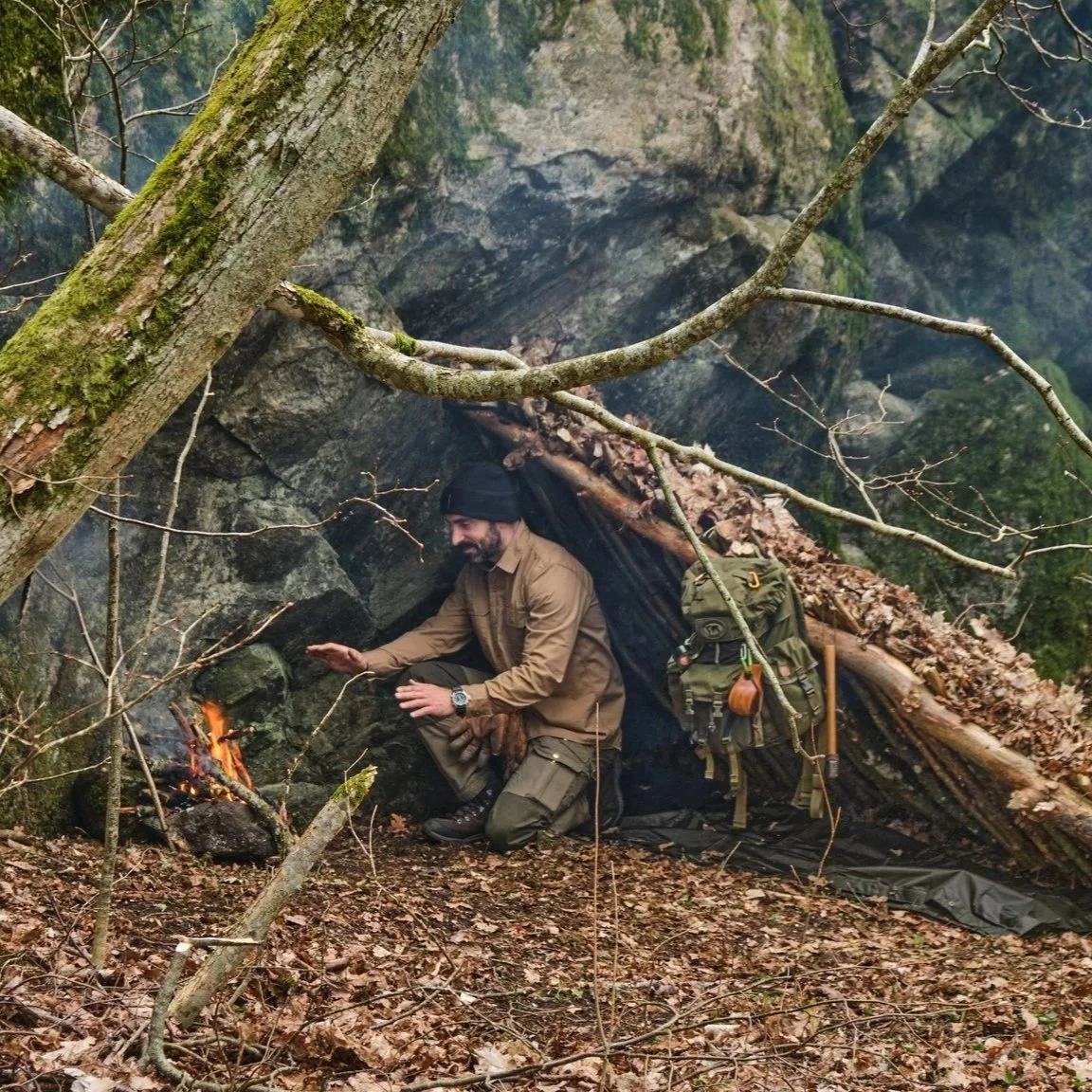
As the course progresses, you will move into natural shelter construction. Working individually and as part of a team, you will gather suitable materials and construct a more substantial shelter designed to retain heat and provide protection from the Norwegian elements.
Throughout the building process, Piero and Kazim will demonstrate different construction techniques, help you solve practical problems, and guide you in improving the strength, efficiency, and weather resistance of your shelter.
The overnight experience will allow you to test your shelter under real conditions. You will identify weaknesses, make adjustments, and discover the difference between a shelter that merely looks good and one that genuinely protects its occupant.
The final challenge will require you to apply everything you have learned by planning and constructing a functional shelter within a limited time and with restricted equipment.
Physical Requirements
Participants should be prepared for:
Carrying personal equipment over uneven forest terrain
Collecting branches, logs, leaves, and other natural materials
Repeated lifting, cutting, tying, and shelter construction
Working outdoors in rain, wind, cold, or changing weather
Sleeping in a shelter constructed during the course
A reasonable level of fitness is recommended. No advanced bushcraft experience is required, but participants should be comfortable camping outdoors and working with their hands.
Who This Course Is For
Outdoor enthusiasts wanting practical shelter-building skills
Bushcrafters looking to improve their construction techniques
Hikers and campers who want to become less dependent on equipment
Survival students ready to progress beyond basic emergency shelters
Anyone wanting greater confidence in cold and wet environments
Previous outdoor experience is helpful but not essential. A willingness to work, adapt, cooperate, and learn in changing conditions is required.
Outcome
By the end of this course, you will not simply know how to put up a tarp.
You will understand how to assess the environment, choose the right shelter design, work with the available resources, and create effective protection from rain, wind, and cold.
You will leave with the combined knowledge and practical experience of two dedicated wilderness practitioners—and the confidence to build protection when you truly need it.
When the weather turns against you, you will know how to build your refuge.
Shelter Building Course Norway – 3 Days of Bushcraft & Survival Training
Course Details
3 Days / 2 Nights in the Norwegian Wilderness
Dates: 19 - 21 March 2027
Class Limit: 15 participants
Limited places are available to maintain instructional quality and safety.
Includes: Professional instruction, practical field training, and a certificate of completion.
The registration deadline is two weeks before the course start date.
Class Gear List – Click Here
Meeting Location – Click Here
Cancellation Policy – Click Here
Participant Waiver – Click Here
Shelter is more than a roof.
It is protection, temperature regulation, and survival.
In the Norwegian wilderness, exposure to rain, wind, and cold can quickly become more dangerous than hunger or thirst. The ability to build an effective shelter is therefore one of the most important skills you can carry into the outdoors.
Special 2027 Collaboration
The 2027 Shelter Building Course will be led by Piero Visconti together with Kazim, known online as “Turkish Viking.”
Kazim is an experienced bushcraft practitioner and outdoor creator whose work explores wilderness living, survival, camping, woodworking, carving, and the construction of shelters and wooden structures in demanding outdoor environments.
This special collaboration brings together Primal Norway’s structured approach to wilderness training and Kazim’s practical, build-focused experience. Participants will benefit from two instructors, complementary perspectives, and close guidance throughout the planning, construction, testing, and improvement of their shelters.
Discover Kazim’s work:Instagram · YouTube
This immersive three-day course will take you beyond basic tarp setups and teach you how to design, construct, and improve shelters using both modern equipment and natural materials.
You will learn to read the landscape, select a safe location, understand how weather affects shelter design, and create structures capable of protecting you from challenging Norwegian conditions.
The course is practical and hands-on from beginning to end. You will work with the materials available around you, use cutting tools responsibly, and discover how good planning, sound technique, and attention to detail can transform a simple structure into a secure wilderness refuge.
What You Will Learn
Understanding exposure and the role shelter plays in a survival situation
Selecting a safe and effective shelter location
Identifying hazards such as falling branches, unstable ground, flooding, wind exposure, and cold-air pockets
Understanding heat loss through conduction, convection, radiation, and evaporation
Working with tarps, cordage, ridgelines, stakes, and natural anchor points
Essential knots and adjustable tensioning systems for shelter construction
Building different tarp configurations for rain, wind, and changing weather
Constructing natural shelters using locally available materials
Creating raised beds and insulation from cold and wet ground
Improving drainage, wind protection, ventilation, and heat retention
Safely positioning and managing a fire near a shelter
Responsible use of knives, axes, saws, and other cutting tools
Evaluating, testing, repairing, and improving a shelter
Collecting and using natural materials responsibly within an authorized training area
The Experience
During the first stage of the course, Piero and Kazim will introduce the principles behind effective shelter construction. You will learn how location, weather, terrain, available materials, and individual needs influence the type of shelter you should build.
You will then practise several tarp configurations and learn how to create strong ridgelines, reliable anchor points, and effective tensioning systems. These skills will give you fast and adaptable shelter options for hiking, bushcraft, and emergency situations.
As the course progresses, you will move into natural shelter construction. Working individually and as part of a team, you will gather suitable materials and construct a more substantial shelter designed to retain heat and provide protection from the Norwegian elements.
Throughout the building process, Piero and Kazim will demonstrate different construction techniques, help you solve practical problems, and guide you in improving the strength, efficiency, and weather resistance of your shelter.
The overnight experience will allow you to test your shelter under real conditions. You will identify weaknesses, make adjustments, and discover the difference between a shelter that merely looks good and one that genuinely protects its occupant.
The final challenge will require you to apply everything you have learned by planning and constructing a functional shelter within a limited time and with restricted equipment.
Physical Requirements
Participants should be prepared for:
Carrying personal equipment over uneven forest terrain
Collecting branches, logs, leaves, and other natural materials
Repeated lifting, cutting, tying, and shelter construction
Working outdoors in rain, wind, cold, or changing weather
Sleeping in a shelter constructed during the course
A reasonable level of fitness is recommended. No advanced bushcraft experience is required, but participants should be comfortable camping outdoors and working with their hands.
Who This Course Is For
Outdoor enthusiasts wanting practical shelter-building skills
Bushcrafters looking to improve their construction techniques
Hikers and campers who want to become less dependent on equipment
Survival students ready to progress beyond basic emergency shelters
Anyone wanting greater confidence in cold and wet environments
Previous outdoor experience is helpful but not essential. A willingness to work, adapt, cooperate, and learn in changing conditions is required.
Outcome
By the end of this course, you will not simply know how to put up a tarp.
You will understand how to assess the environment, choose the right shelter design, work with the available resources, and create effective protection from rain, wind, and cold.
You will leave with the combined knowledge and practical experience of two dedicated wilderness practitioners—and the confidence to build protection when you truly need it.
When the weather turns against you, you will know how to build your refuge.